
Mold and Hidden Moisture in Your Colorado Home
Colorado homes can experience moisture problems in every season. Plumbing leaks, roof leaks, snowmelt, poor drainage, condensation, and damp crawlspaces can all leave building materials wet. If moisture remains, mold may begin to grow.
Some leaks are obvious. Others occur behind drywall, beneath flooring, inside cabinets, or in an attic or crawlspace. A concealed leak may not leave an immediate stain or visible mold on the room-side surface. Moisture can build up out of view, and visible signs may appear only after materials have been wet for some time. A musty odor, a change in nearby materials, or a history of water intrusion can be a reason to investigate even when no mold is visible.
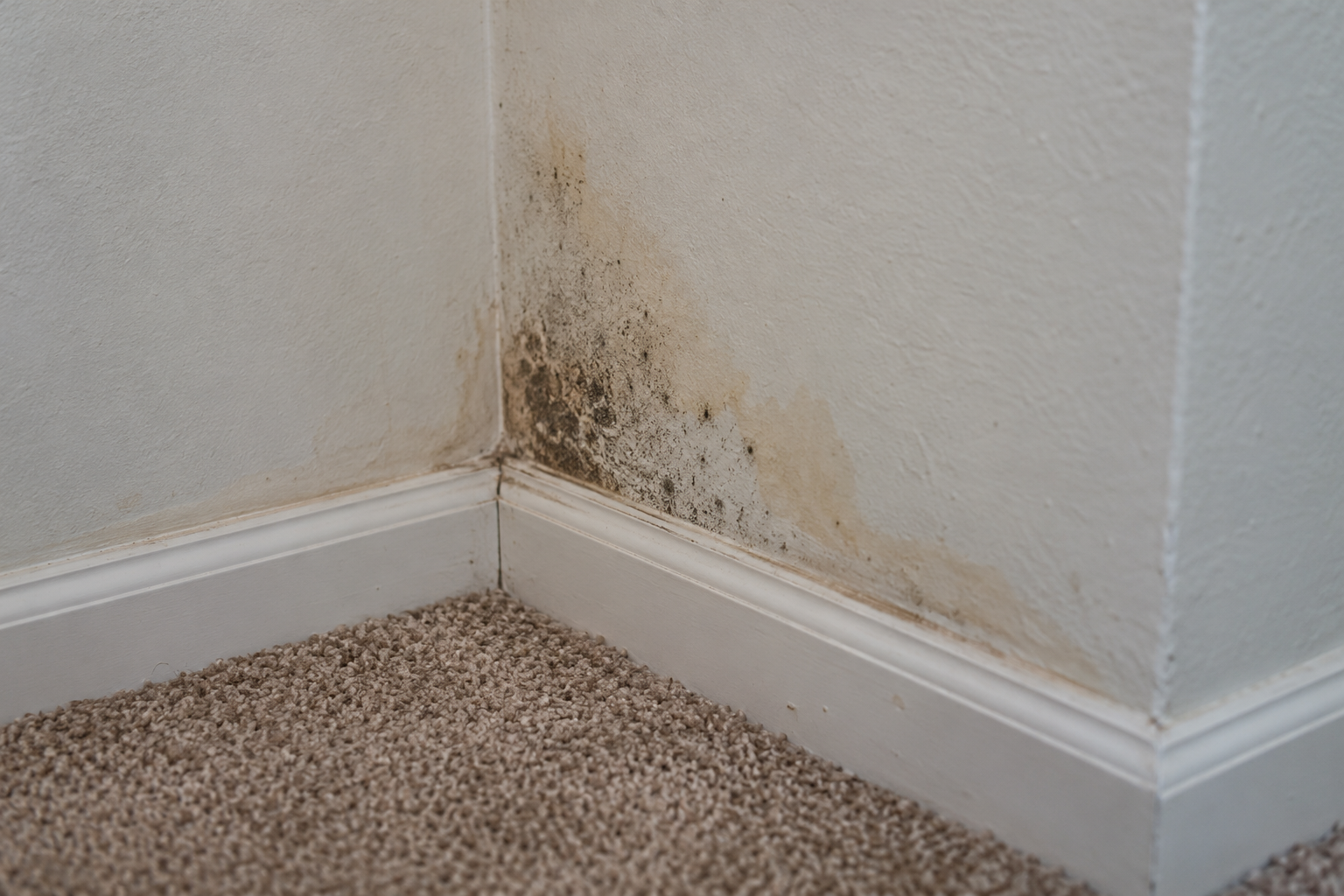
Illustrative photo of mold-like growth and water staining at a wall and baseboard.
Illustrative image. A photo cannot identify the type of growth or establish the full extent of a moisture issue.
How an unseen leak can lead to mold
Mold spores are common in indoor and outdoor environments. Mold growth may occur when spores land on a surface that stays damp. A slow plumbing leak, roof leak, window leak, or water intrusion at the foundation can wet building materials without immediately making the problem obvious from inside the home.
Moisture may travel or collect behind finishes, around plumbing, beneath flooring, or inside insulation. The visible side of a wall can look normal while concealed materials are damp. In other cases, early clues may include a faint stain, bubbling or peeling paint, swollen trim, or a persistent musty odor. These clues do not by themselves confirm mold, but they can point to a condition that deserves further evaluation.
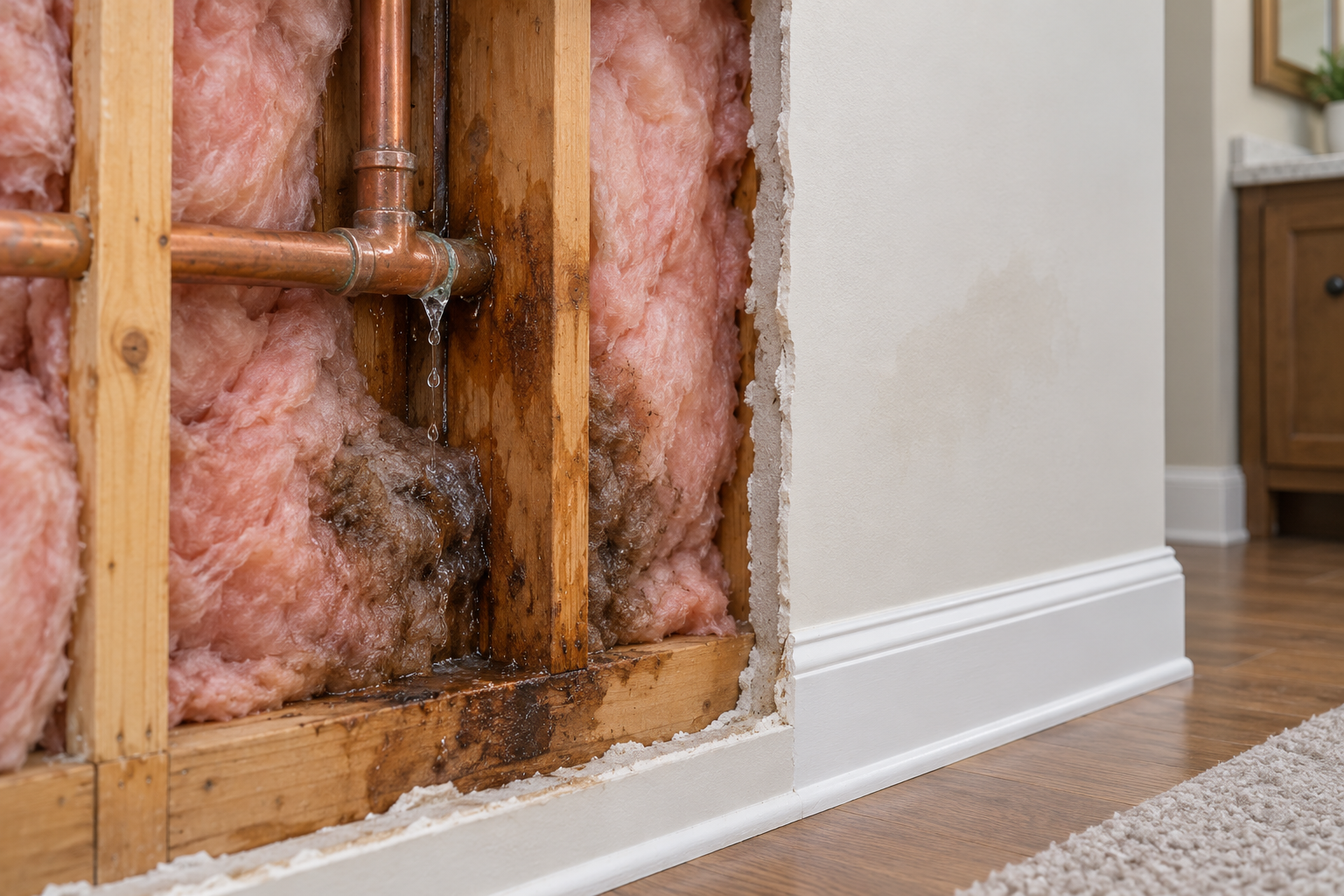
Illustration of a plumbing leak wetting wall materials behind drywall while the room-side surface shows only a subtle mark.
Illustrative cutaway showing how moisture can remain concealed. Actual conditions vary by home.
What infrared imaging can and cannot show
Villa Vista uses high-end infrared cameras as one tool during an inspection when conditions make them useful. Infrared imaging displays surface temperature patterns. Differences may help identify areas that warrant closer evaluation, including possible moisture concerns, but an infrared camera does not see through walls and does not confirm moisture or mold on its own. Findings should be considered with the visible conditions, moisture measurements when appropriate, and the limits of the inspection.
Air sampling and mold assessment
When sampling is appropriate for the situation and agreed scope, Villa Vista uses a BREEZE ET air sampling pump with a spore trap cassette to collect air samples for laboratory analysis. The results describe the sample collected at that place and time. Air sampling is one part of an assessment; it does not locate a hidden leak, identify every concealed area, or by itself prove that a home is free of mold.
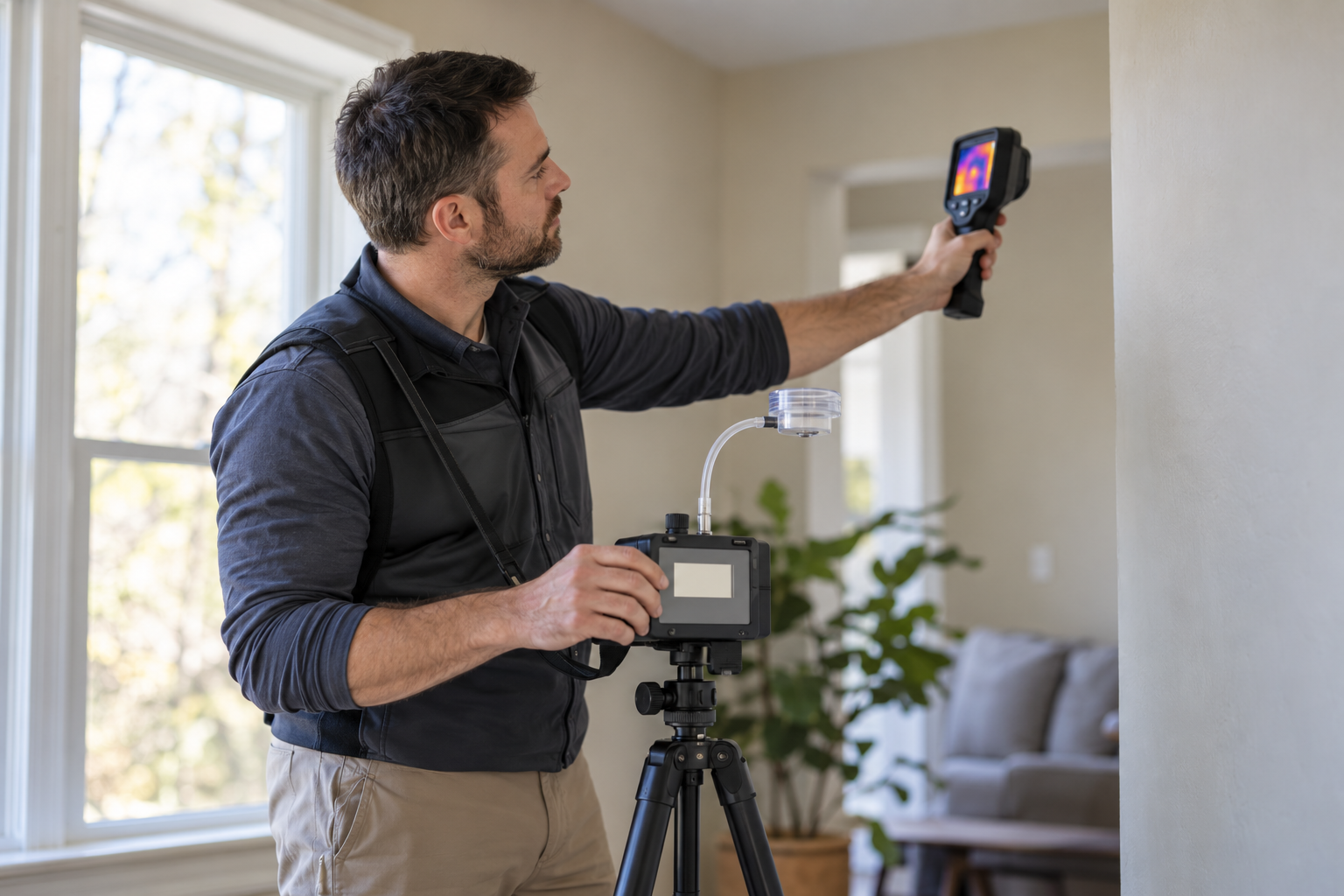
Representative image of an inspector using air sampling and infrared equipment. Replace with a photo of Villa Vista’s actual BREEZE ET pump and infrared cameras before publication.
Representative, AI-generated equipment image. It does not depict Villa Vista’s exact pump or infrared camera models.
What to expect from a mold inspection
A mold and moisture inspection generally focuses on visible conditions, moisture concerns, and areas that can be accessed. The inspection can document observed conditions and help identify whether additional evaluation may be appropriate. It does not include opening walls or other finished surfaces unless that access is specifically arranged.
If there is active water intrusion, repairing the source is an important part of addressing the condition. Cleaning or covering a surface without correcting the moisture source may allow the problem to return. Extensive damage, recurring leaks, or moisture in concealed or porous materials may require a qualified water damage or remediation professional.
When to consider an inspection
Consider a professional assessment if you notice a recurring musty odor, unexplained staining, peeling or bubbling finishes, a history of water intrusion, or moisture concerns in a basement, crawlspace, attic, or around plumbing. An inspection may also help document conditions when buying or maintaining a home.
Villa Vista Inspection Services provides mold and moisture assessment services in the Denver metro area. We can document visible concerns and moisture conditions in accessible areas, discuss sampling when it fits the situation, and explain when further evaluation may be appropriate.
Call to action: [Contact Villa Vista Inspection Services] to schedule or ask a question.



Leave a Reply
Want to join the discussion?Feel free to contribute!